
10 Google Business Profile Tweaks That Move You Into the Local 3-Pack
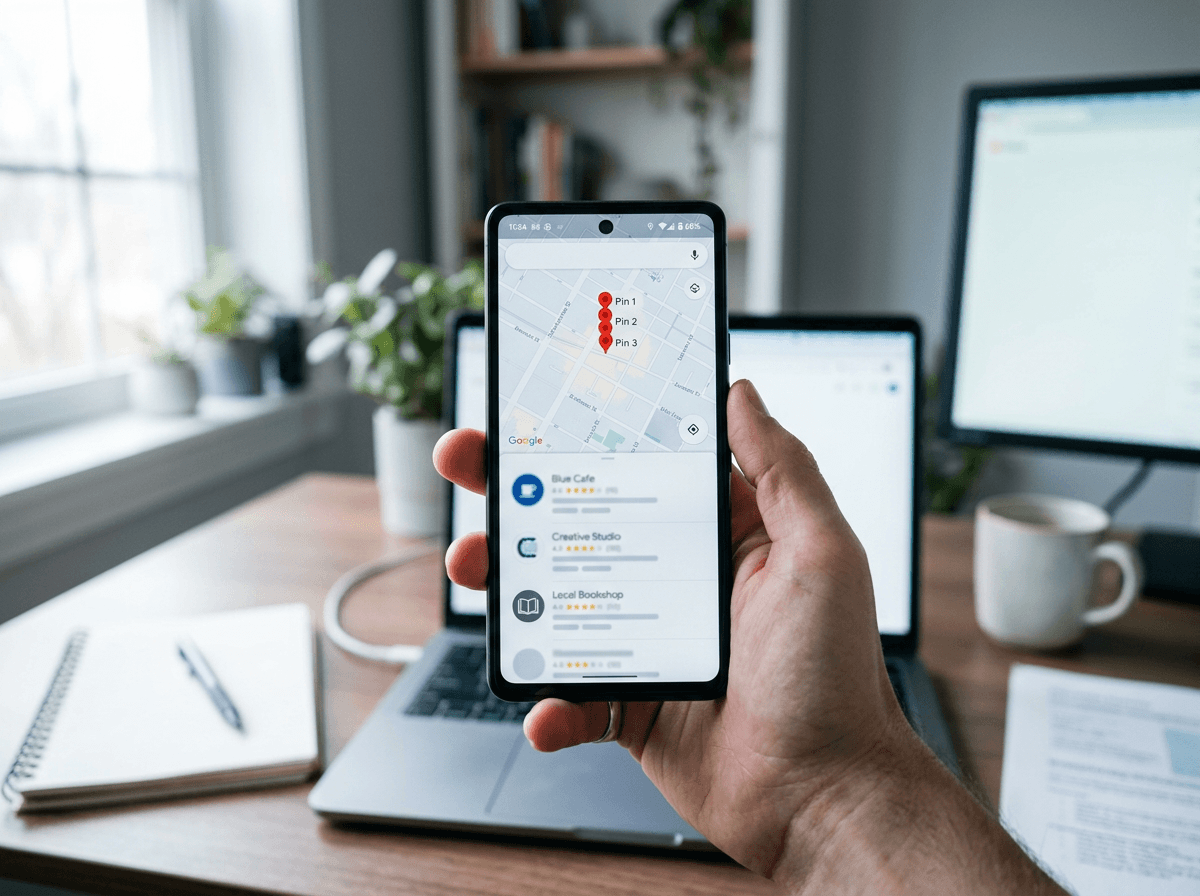
The Local 3-Pack — those three businesses Google shows on the map at the top of local search results — is where the phone actually rings. Get into it for “plumber [your city]” or “AC repair [your city]” and you’ll out-earn most paid campaigns. Stay out of it and you’re hoping homeowners scroll past three competitors before they find you.
The good news: most home service Google Business Profiles are 60% finished, and the missing 40% is what separates page-2 listings from the 3-Pack. Here’s the checklist we run on every profile we touch.
1. Nail the primary category (this is the single biggest lever)
Google ranks you primarily based on your primary category, not your business name or services list. Pick wrong here and nothing else you do matters.
A few rules:
- Match the language homeowners actually search. “HVAC Contractor” beats “Heating Equipment Supplier.” “Plumber” beats “Plumbing Supply Store.”
- Pick the most specific accurate category. “Roofing Contractor” beats “Contractor.”
- Don’t pick a category that includes “supply store” or “wholesaler” unless that’s literally your business model.
To check: go to your profile, click Edit profile → Business information → Category. If your primary doesn’t read like the #1 thing a customer would type into Google, change it today.
2. Add every relevant secondary category
You can add up to 9 secondary categories. Most contractors have 0 or 1. Add the ones that actually describe what you do:
- An HVAC company might add: Air Conditioning Repair Service, Furnace Repair Service, Heating Contractor, Air Duct Cleaning Service
- A plumber might add: Drainage Service, Hot Water System Supplier, Septic System Service
Secondary categories don’t carry as much weight as the primary, but they expand the queries you’re eligible to rank for. Free upside.
3. Fill out every service with a real description
The Services section is where you tell Google (and customers) exactly what you do. Most profiles have 3 generic services with no descriptions. Yours should have 15–30, each with a 1–2 sentence description that includes the service name naturally.
Example:
Tankless Water Heater Installation — We install all major brands of tankless water heaters in homes across [Service Area]. Free in-home estimates, financing available, and a 10-year parts warranty on every install.
This isn’t fluff. Services + descriptions feed Google’s understanding of what you do, and they show up directly in search results when someone clicks into your profile.
4. Get your review velocity moving
The 3-Pack is reviews-heavy. The businesses that show there typically have both:
- Volume — usually 50+ reviews, often 200+ in competitive markets
- Velocity — fresh reviews coming in regularly (not 100 reviews from 3 years ago)
If your competitors have 200 reviews and you have 28, you have a math problem before you have a marketing problem. Build a system to ask every happy customer every time. (We wrote a full guide on getting more 5-star reviews — go read that one too.)
5. Respond to every review — yes, every one
This is one of the cheapest ranking signals you’re ignoring. Google has confirmed multiple times that responding to reviews is a positive ranking factor for local search.
Rules of the road:
- Respond within 48 hours when possible
- Address the customer by name
- Mention the service or city naturally in your response (without keyword-stuffing)
- Respond to negative reviews professionally and publicly — never argue, always offer to take it offline
- Don’t copy-paste the same response to every 5-star review (it’s obvious, and Google may discount it)
6. Post weekly — and post the right things
Google Business Profile posts don’t directly move rankings much, but they affect how you show up. Profiles that post weekly are more likely to have their photos and offers shown in the map preview, and posts increase the time people spend on your profile (which Google does track).
What to post:
- Photos from real jobs with a 1–2 sentence caption (avoid stock photos — Google can tell)
- Specials and offers with a clear expiration date
- Project before/afters
- Tips relevant to the season (“Why your AC sounds like that and what to do about it”)
One post per week is plenty. Skip the holidays-only frequency — that’s worse than not posting at all.
7. Upload real, geo-tagged photos every month
Photos are the #1 way profiles get “discovered” in Google search (i.e., shown to people who didn’t search your business name). Profiles with 100+ photos consistently outperform profiles with 10.
Tactical advice:
- Use a phone with location services on when taking job photos so EXIF data includes GPS coordinates
- Upload 5–10 new photos every month, not 100 once and then nothing
- Include the city name in the file name before uploading (valdosta-ac-install-2026-04.jpg)
- Mix categories: exterior shots, team photos, equipment, before/afters, work-in-progress
Don’t watermark them with a giant logo. Google has been known to suppress overly-branded photos.
8. Seed the Q&A section yourself
The Q&A section on your profile is publicly visible and most contractors ignore it — until a random homeowner posts a question and a competitor or a bot answers it for them.
Take 20 minutes and post 8–12 questions yourself (from a personal Google account, not your business account), then answer them from your business account. Use the questions homeowners actually ask:
- “Do you charge for estimates?”
- “How quickly can you come out for an emergency?”
- “Do you service [neighboring city]?”
- “Do you offer financing?”
- “Are you licensed and insured?”
These show up in your profile and pre-answer the objections that lose you calls.
9. Get your service area set correctly
The service area you set in your profile tells Google where to show you on the map. Two common mistakes:
- Setting a service area that’s too broad. If you cover 30 ZIP codes but list a 100-mile radius, Google has a harder time deciding which city to rank you in.
- Setting it as an address-only business when you’re actually mobile. If you go to customers’ homes and don’t have a storefront they walk into, you should be set up as a service-area business (which hides your address but lets you rank in multiple cities).
Get this right once and forget about it.
10. Audit for the things that get profiles suspended
Suspensions are the single fastest way to lose all your local rankings overnight, and Google has gotten more aggressive about them. Audit yours for:
- A business name that includes keywords you don’t actually have a legal right to (“ABC Plumbing — 24/7 Emergency Repair Valdosta” is a suspension waiting to happen — name should match your real business name)
- A virtual office or UPS Store as your business address
- An address that’s been used by other businesses before (look it up in a previous-occupant search)
- Categories that don’t match what you actually do
- Stock photos of teams that aren’t yours
- A phone number that forwards to a different company
Fix anything sketchy before you push for more rankings. Pushing harder on a non-compliant profile is how you get suspended.
The order to do this in
If you’re starting from scratch on an under-optimized profile, run this play in order:
- Categories (today)
- Services + descriptions (today)
- Photos uploaded (this week)
- Review responses caught up (this week)
- Q&A seeded (this week)
- Posting cadence started (ongoing — Mondays work great)
- Review velocity system in place (this month)
You’ll see movement in 2–6 weeks on most of these. The 3-Pack isn’t a magic event — it’s the result of consistently being a more complete, more active, more reviewed profile than your competitors.
The bottom line
The contractors that own the Local 3-Pack in their city aren’t paying more for ads. They’re running a more disciplined profile than their competitors — categories dialed in, reviews coming in weekly, fresh photos every month, every question pre-answered. None of it is hard. All of it is consistent.
If you’d rather have someone handle the consistent part — categories, reviews, posts, photos, the suspension-avoidance audit — that’s most of what our Google Business Profile management service does. Get in touch and we’ll run a free audit on your current profile and tell you exactly what’s holding it back.